2D Illustration to 3D Visual
Perfectly recreating a hand-drawn 2D illustration in 3D


Internal R&D Project
What if you could "move a camera" inside a hand-drawn illustration without redrawing a single frame? Well, that's what we set out to explore. Could we marry 3D's easy-to-do camera moves with the beauty of 2D hand-drawn illustration? Could we make the 3D render look so convincing that you'd struggle to tell it from the original reference?
The Service
End-to-end animated video production.
The Collaborator
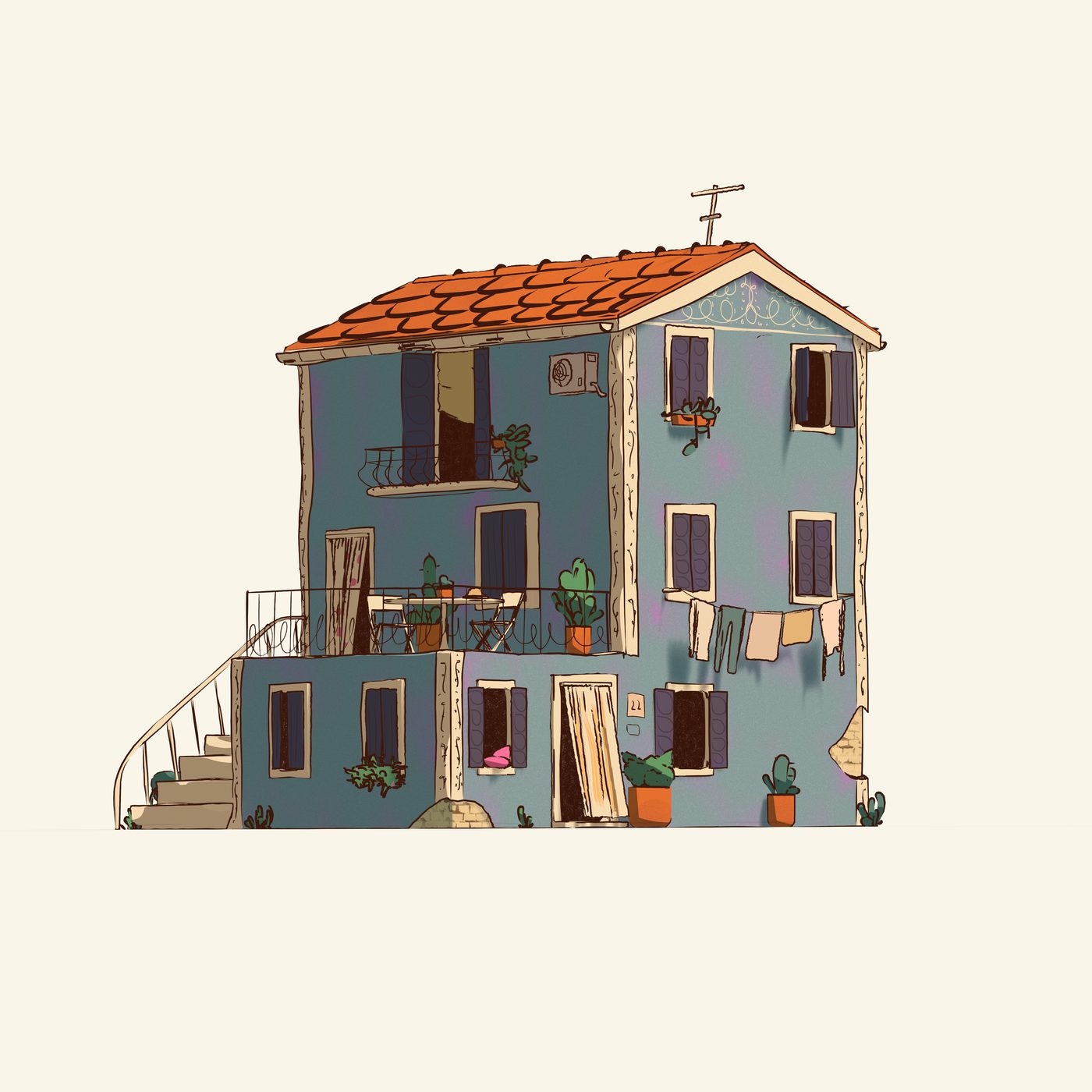
Magdalina Dianova - original 2D illustration.
The Deliverable
Stylized 3D model and a rendered turntable animation.
The Process
Setting up the challenge
To justify this experiment, we needed a 2D illustration that was complex enough to make it hard to rotate in traditional workflows.
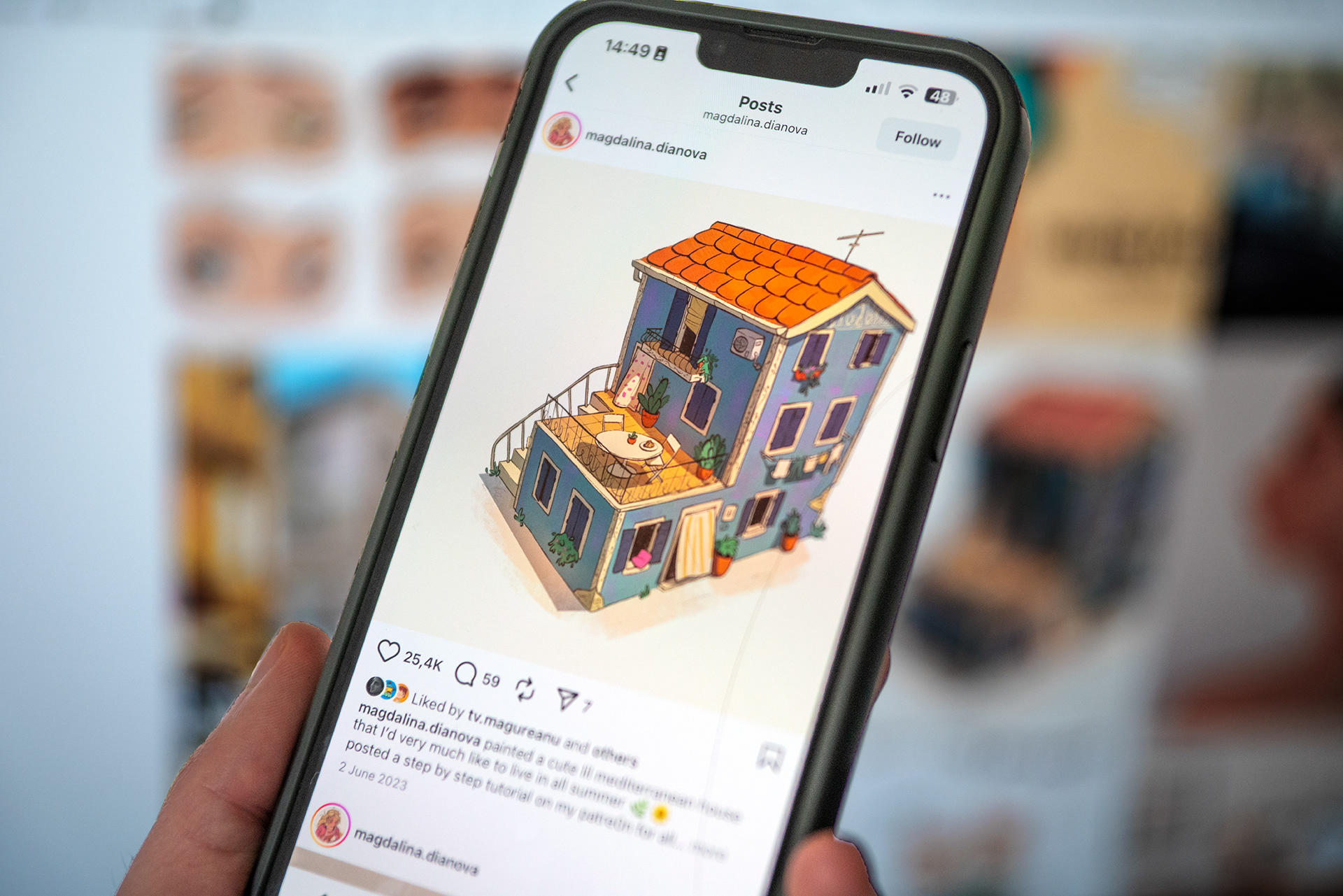
Eventually, we found the beautiful house illustration that Magdalina Dianova posted on her instagram, and she was gracious enough to grant us permission to use it as reference.
Break it down then build it up
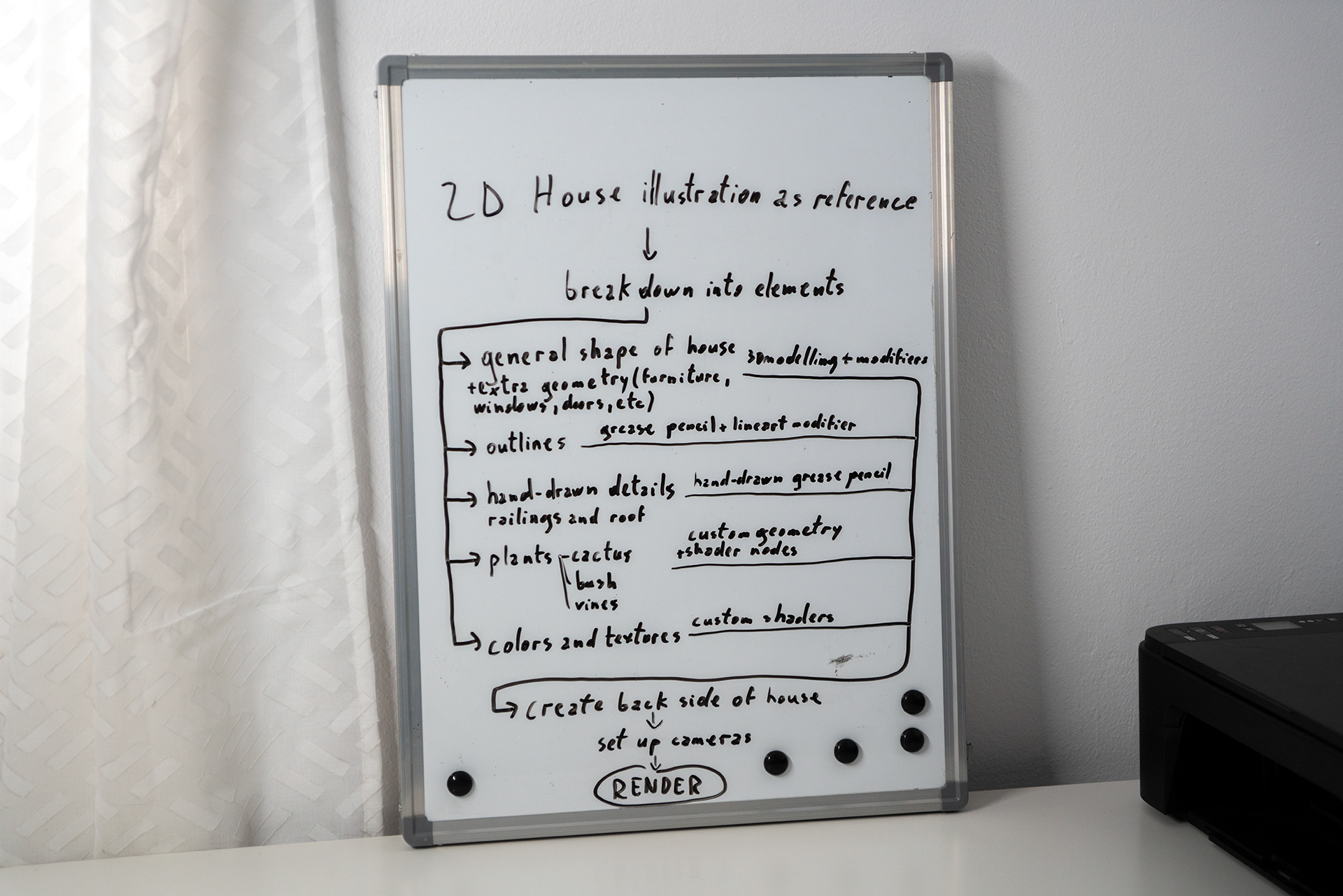
Next, we broke the illustration down into parts and rebuilt each element with the right mix of tools and workflows: 3D modeling, modifiers, custom shaders, grease pencil lines, and geometry nodes. Some of the features, such as the balcony railings and small hand-drawn details, were sketched by hand in 3D, preserving the hand-made feel without the need to redraw them for each frame of the animation.
Planting possibilities
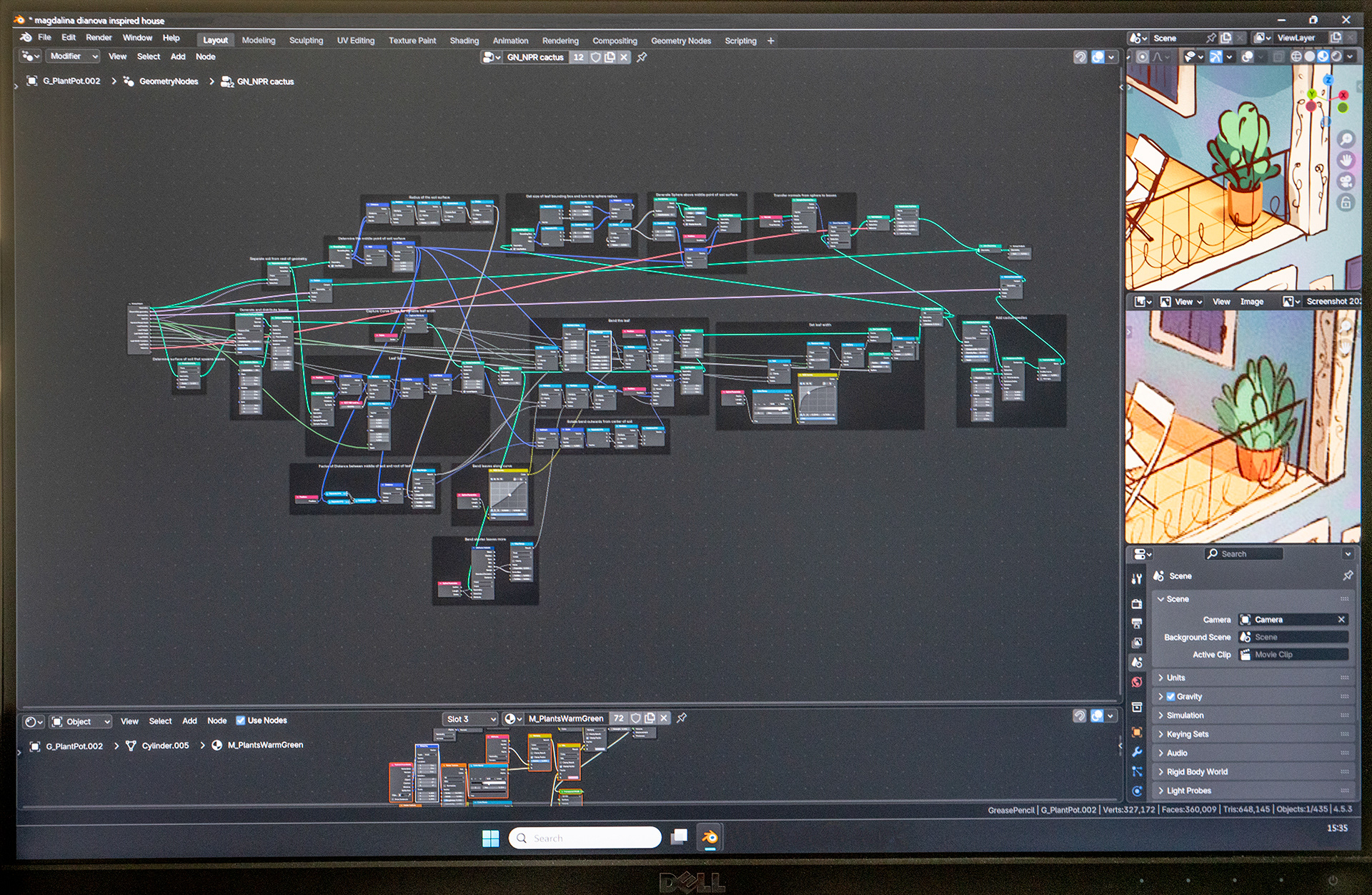
The plants proved to be the biggest challenge. Hand-drawn foliage relies on loose shapes and expressive strokes, but 3D doesn't work that way. As in real life, 3D plants are a collection of well-defined vines, branches, leaves, flowers and so on. So how do you make a vague volume with random-looking strokes in 3D? With geometry, math and programming logic, a.k.a. geometry and shader nodes in Blender. After a week of work, we built a procedural plant generator that bent the limits of 3D rendering to achieve that 2D look we were chasing, and we could create endless variations of them with only a few clicks.

The final 3D render matched the original illustration so closely that peers couldn't distinguish it from the hand-drawn version, and the turntable animation proved how smoothly the camera rotation could feel with this workflow.

This experiment proved that you can bring the visual charm of 2D hand-drawn work into fully 3D scenes, combining it easily with camera moves, parallax, and the kind of cinematic motion that is usually hard to reach for traditional 2D animation.
It's a technique that we now happily integrate into our projects when a client wants to stand out by bringing in an illustrative, human touch with a novel spin to their visual communication.

"Tudor shared his 2D-looking 3D house project in one of our creative group meetings, and it was hard to tell the illustration apart from the renders. I've seen a lot of creative work over the years, and this one in particular stuck with me. It proved he has a good eye for details, an interesting vision and the kind of strong technical expertise required to achieve that vision."

Ben Burns
Co-founder • Maker Division
Founder/CEO • Alden
Is your business looking to tell something awesome to the world?
Let's chat to see if you can do it through video!You may also like
View all
200 Years to 20 Minutes
Live-Action & Motion Graphics Production, Video Editing, Editorial/DocumentaryFrom sparse historical footage to a story that just flows.

The Explainer Video With Four Jobs
Explainer, Demo, Showcase, Announcement VideoHow one video helped announce, explain, demo and advertise a product and its new pricing.
What Comes After A Rebrand
Showcase, Announcement, Corporate, Brand VideoHow we turned a new brand identity into a top-performing social post.